-
tel:
+86 181 6205 2962 -
email:
operators@sdchinamachine.com

Small Excavator Electric Shock Prevention – Safety Tips for Operators
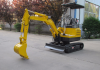
Small Excavator Electric Shock Prevention – Safety Tips for Operators
Working near power lines is one of the biggest risks on a construction site. Here's what every small excavator operator needs to know about electric shock prevention – before, during, and after an incident.
Construction sites are complicated places. Power lines run overhead, cables are buried underground, and you're operating a machine made mostly of steel. One wrong move can be fatal. But most electric shock incidents are preventable – if you know what to look for and what to do.
Before You Start: Know What's Around You
Most electric shock accidents happen because the operator didn't know the power lines were there. Here's what to check before you turn the key:
- Walk the site first. Look up. Look down. Identify every overhead line, utility pole, and electrical box within your work area.
- Call before you dig. If you're trenching or excavating, contact the local utility locator service. They'll mark buried cables and pipes so you know where not to dig.
- Mark safe routes. Plan your travel paths and operating areas away from power lines. If you're moving the machine around the site, know exactly where you can and cannot go[reference:0].
- Know the safe distances. The minimum safe distance depends on the line voltage:
- Under 1kV – stay at least 1.5 meters (about 5 feet) away[reference:1]
- 3-10kV – stay at least 2 meters (about 6.5 feet) away[reference:2]
- Above 35kV – stay at least 4 meters (about 13 feet) away[reference:3]
- Use a spotter. If you absolutely must work near power lines, have someone on the ground watching your clearance. They can warn you before you get too close[reference:5].
During Operation: Keep Your Distance
Once you're working, staying safe is about constant awareness:
- Lower the boom when moving. When traveling around the site, keep the boom and arm as low as possible. A raised boom is more likely to swing into overhead lines[reference:6].
- Don't assume lines are insulated. Most overhead power lines are not insulated. Even if they look like they have a coating, that's usually weatherproofing, not insulation. Electricity can arc – meaning it doesn't have to touch your machine to kill you[reference:7].
- Stay alert near poles. Power poles can shift or lean over time. The actual line height may be lower than you expect.
If You Hit a Power Line – Stay in the Cab
This is the most important rule: if your excavator touches a power line, do not get out.
The exterior of the excavator is made of steel, and the ground around the machine becomes energized[reference:8]. The interior of the cab, however, is insulated. As long as you stay inside, you're safe[reference:9].
Here's what to do:
- Stay calm. Panic is your biggest enemy. Take a breath.
- Try to move the machine away. Slowly and carefully, try to drive the excavator away from the power line[reference:10]. If you can break contact, you're out of danger.
- If you can't move it, stay put. Do not try to get out and run[reference:11]. The ground within about 10 meters of the machine is live[reference:12]. If you step out, your body becomes the path for electricity to reach the ground.
- Call for help. Use your phone or radio to call for rescue. Tell them exactly what happened and that you're staying in the cab.
- Wait for the power to be cut. Do not leave the cab until the utility company confirms the power has been shut off.
If You Must Exit – The Bunny Hop
In extreme cases – if the machine is on fire or about to explode – you may have no choice but to get out. But do it the right way:
- Jump, don't step. Jump out of the cab with both feet together. Do not touch the machine and the ground at the same time[reference:13].
- Hop away. Keep your feet together and hop or shuffle to safety. Do not take normal walking steps[reference:14]. The voltage spreads out in rings from the machine – if your feet are on different rings, you become the circuit[reference:15].
- Get at least 10 meters away. Once you're clear, don't go back until the power is confirmed off[reference:16].
Daily Habits That Reduce Risk
Electric shock prevention isn't just about what you do in an emergency – it's about the small habits you build every day:
- Wear proper footwear. Always wear insulated rubber boots. Never operate in slippers, sandals, or bare feet[reference:17]. Good quality insulated boots are cheap compared to the alternative.
- Keep the cab dry. Water conducts electricity. A wet floor or wet controls increase the risk if the machine becomes energized.
- Don't assume it's safe. If you're not sure whether a line is live or dead, treat it as live. Never start work until you have confirmation from the utility company[reference:18].
- Report damaged equipment. Frayed cables, exposed wires, or damaged insulation on the machine itself should be fixed immediately.
Frequently Asked Questions
Is the operator safe inside the excavator if the machine touches a power line?
Yes – as long as you stay inside. The excavator's steel body acts as a Faraday cage. The exterior and the ground within about 10 meters become live, but the interior remains insulated[reference:19]. Do not step out.
What should I do if my excavator hits an overhead power line?
Stay in the cab. Try to move the machine away from the line slowly and calmly. If you can't move it, stay put and wait for rescue. Do not get out – the ground around the machine is energized[reference:20].
What is the safe distance between an excavator and a power line?
For lines under 1kV, stay at least 1.5 meters away. For 3-10kV lines, stay at least 2 meters away. For lines above 35kV, stay at least 4 meters away[reference:21][reference:22]. When in doubt, call the utility company.
What protective gear should an excavator operator wear to prevent electric shock?
Always wear insulated rubber boots with good dielectric strength. Never operate in slippers, sandals, or bare feet[reference:23]. Insulated gloves are also recommended when handling cables or working near electrical equipment.
Need More Safety Information?
If you're looking for more detailed safety guidelines or have questions about operating small excavators near power lines, we're here to help.
📧 Email: operators@sdchinamachine.com
📞 WhatsApp: +86 181 6205 2962
Related News


.webp?x-oss-process=image/resize,w_100/quality,q_100)




.webp?x-oss-process=image/resize,w_100/quality,q_100)


.webp?x-oss-process=image/resize,w_100/quality,q_100)


Contact US
Product Information
Quantity
Unit
Piece
Support order samples, customization, wholesale direct, and complete payment. If the product you look for does not have corresponding customized content, pls fill out the form below to contact us, and we will reply ASAP.