-
tel:
+86 181 6205 2962 -
email:
operators@sdchinamachine.com

Static Roller Compactor – 8 Advantages That Matter on the Job Site
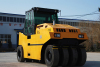
What Is a Static Roller Compactor?
A static roller compactor is a heavy machine that uses its own weight – not vibration – to compress soil, gravel, asphalt, or other materials. The steel drums roll over the surface, applying pressure evenly to achieve the required density.
Unlike vibratory rollers, which use a vibrating drum to shake material into place, static rollers rely purely on weight and momentum. They're simpler, easier to maintain, and often more reliable for certain types of compaction work – especially on granular materials like gravel and sand.
Here are the 8 practical advantages that keep static rollers on job sites year after year.
1. Operator Comfort – You Spend All Day in the Seat
Cab visibility matters when you're working inches from the edge of a sub-base or asphalt mat. Static rollers typically have spacious cabs with wide-view windows, so operators can see the drum edges clearly without craning their necks. Air conditioning and heating are available options – not a luxury when you're working through summer heat or early spring mornings.
Comfort isn't about being nice to the operator. It's about keeping them alert and accurate for an entire shift. A tired operator makes mistakes. A comfortable operator gets the compaction right the first time.
2. Articulated Steering – Less Rework, Better Coverage
Articulated steering means the machine bends in the middle, not just at the front wheels. This allows the rear drum to follow the same path as the front drum, even when you're turning or changing compaction lanes.
Why does that matter? Consistent overlap. When the rear drum follows the front drum's path exactly, you get even compaction across the entire width of the pass. No missed strips. No over-compacted spots. No rework.
3. Power Sprinkler System – Stop Asphalt from Sticking
Asphalt sticks to steel drums. When it does, you get a rough, uneven surface that fails inspection. The sprinkler system on a static roller keeps the drums wet – just enough to prevent sticking without flooding the work area.
Quality static rollers use a multi-stage filtration system for the sprinkler water. Clean water means nozzles don't clog. Nozzles that don't clog means consistent spray. Consistent spray means clean drums. Clean drums means a smooth finished surface.
4. Drivetrain and Components Built for the Job
Static rollers use drive axles specifically designed for compaction work – not repurposed truck axles. The difference shows up in durability. A roller axle handles constant weight, constant turning, and constant heat without premature wear.
Maintenance-free batteries and sealed electrical systems mean fewer things to check before a shift. You start the machine, check the fluids, and get to work. No chasing electrical gremlins.
Front and rear mud scrapers keep debris from building up on the drums. Sand-filling ports let you adjust the line load to match the material you're compacting – heavier for asphalt, lighter for granular sub-base.
5. Simple Transmission – Three Speeds Forward, Two Reverse
You don't need a dozen gears on a compactor. The transmission on a static roller typically offers three forward speeds and two reverse speeds – enough to handle the compaction pass and repositioning between passes.
Single-handle shifting keeps the operator's other hand on the steering wheel. Air-assisted clutch and cable control make the shifts smooth and light. At the end of a 10-hour shift, that reduced effort adds up to less fatigue and more consistent work.
6. Fuel Efficiency and Emissions – Lower Operating Cost
Modern static rollers use turbocharged diesel engines that meet current emission standards without sacrificing power. Low noise output is a bonus – especially on urban job sites where noise restrictions are strict.
The engine is sized for the work. It's not over-powered (wasting fuel) or under-powered (struggling to maintain speed on inclines). It's matched to the weight and rolling resistance of the machine, which means you're not burning extra fuel to move a machine that's already heavy enough to do the job.
7. Braking System – Safety Without Complication
Static rollers use a dual braking system – emergency braking and parking brake. The emergency brake is air-over-oil, which provides reliable stopping power even in wet or muddy conditions. The parking brake is cable-operated, simple and dependable.
Neutral start protection prevents the machine from starting in gear – a basic safety feature that prevents unexpected movement when you turn the key. It's simple, but it matters on a crowded job site.
8. Easy Maintenance – Less Downtime, More Work Done
The engine hood on a static roller opens wide, exposing all the common service points – oil fill, filters, coolant reservoir, and battery terminals. You don't need to disassemble half the machine to check the fluids or change a filter.
This matters on a job site where downtime is measured in lost production, not just repair costs. A machine that's easy to service spends less time in the shop and more time on the mat.
Interested in other types of compaction equipment? Explore our full range of road rollers – from handheld units to full-hydraulic models – to find the right machine for your job site.
Related News

.webp?x-oss-process=image/resize,w_100/quality,q_100)



.webp?x-oss-process=image/resize,w_100/quality,q_100)


.webp?x-oss-process=image/resize,w_100/quality,q_100)


Contact US
Product Information
Quantity
Unit
Piece
Support order samples, customization, wholesale direct, and complete payment. If the product you look for does not have corresponding customized content, pls fill out the form below to contact us, and we will reply ASAP.