-
tel:
+86 181 6205 2962 -
email:
operators@sdchinamachine.com

Crawler Transporter for Agriculture – 7 Advantages for Small Farms
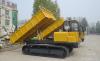
What Is a Crawler Transporter?
A crawler transporter is a small tracked vehicle designed to carry materials across rough or soft terrain where wheeled vehicles struggle. It's used on farms, construction sites, and in forestry – anywhere you need to move heavy loads over ground that's muddy, sandy, or uneven.
Unlike wheeled vehicles, crawler transporters use rubber or steel tracks. The tracks distribute the machine's weight over a larger surface area, which means less ground pressure and better traction on soft surfaces. Here's why that matters for agricultural work.
7 Practical Advantages of Crawler Transporters
1. Works on Rough and Soft Terrain
Wheeled vehicles sink in mud, spin on sand, and slip on ice. Crawler transporters don't have that problem. The tracks provide traction on swamps, river beaches, deserts, paddy fields, tropical rain forests, and snow.
If your farm has wet areas, sandy patches, or uneven ground, a crawler transporter keeps moving when other machines get stuck. That means fewer delays and less time spent pulling equipment out of the mud.
2. Simple, Reliable Design
The structure of a crawler transporter is straightforward – fewer moving parts than a wheeled vehicle with complex suspension and steering systems. The transmission is stable and the controls are simple to operate.
Simple design means less to break. When you're working in remote areas or during peak season, reliability matters more than fancy features.
3. Low Fuel Consumption
Crawler transporters typically use single-cylinder diesel engines. They're not powerful enough for highway speeds, but they don't need to be. On a farm or job site, you're moving at walking speed, not highway speed.
The single-cylinder design is fuel-efficient – you're not burning diesel to move a heavy drivetrain at high speeds. Lower fuel consumption means lower operating costs per hour.
4. Strong Traction and Climbing Ability
The tracks provide excellent traction, which translates to good climbing performance on slopes and uneven ground. The machine can handle inclines that would cause a wheeled vehicle to lose grip and slide back.
If your farm has hills or slopes, this matters. You can move materials up and down without worrying about losing control or getting stuck halfway.
5. Small Turning Radius – Works in Tight Spaces
Crawler transporters can turn in a much smaller radius than wheeled vehicles of similar size. The tracks allow the machine to pivot almost in place, which makes it maneuverable in narrow spaces.
On a farm with tight sheds, narrow pathways, or crowded yards, the ability to turn sharply saves time and reduces the risk of hitting obstacles.
6. Easy to Operate
Crawler transporters come with electric starters and centralized controls – no complicated procedures to get started. The controls are laid out logically, and the machine responds predictably to inputs.
If you're training seasonal workers or family members who aren't experienced operators, an easy-to-use machine reduces the learning curve and the risk of mistakes.
7. Hydraulic Lifting and Self-Unloading
Many crawler transporters come with a hydraulic system that lifts the bed and dumps the load automatically. This eliminates the need for manual unloading – you just pull a lever and the bed tilts.
Reducing manual labor is one of the biggest benefits of mechanization. A hydraulic dump bed saves time, reduces physical strain, and allows one person to do what used to take two or three.
Who Benefits from a Crawler Transporter?
These machines are useful for anyone who needs to move materials across soft or uneven ground. Common users include:
- Small farms – moving feed, manure, harvested crops, and equipment
- Orchards and vineyards – navigating between rows without compacting soil
- Construction sites – moving materials on muddy or uneven ground
- Forestry operations – hauling logs and equipment through soft terrain
- Snow removal – clearing snow from pathways and yards
Related News


.webp?x-oss-process=image/resize,w_100/quality,q_100)




.webp?x-oss-process=image/resize,w_100/quality,q_100)


.webp?x-oss-process=image/resize,w_100/quality,q_100)


Contact US
Product Information
Quantity
Unit
Piece
Support order samples, customization, wholesale direct, and complete payment. If the product you look for does not have corresponding customized content, pls fill out the form below to contact us, and we will reply ASAP.