-
tel:
+86 181 6205 2962 -
email:
operators@sdchinamachine.com

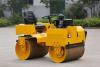
How to Safely Park a Small Road Roller: 5 Critical Safety Rules for Operators
How to Safely Park a Small Road Roller: 5 Critical Safety Rules for Operators
Whether you are working on a flat municipal sidewalk or a sloped driveway, parking your compaction equipment requires more than just pulling a lever. In this guide, we break down the industry-standard safety protocols for parking small rollers to protect your crew, your site, and your machinery.
Rule 1: Always Prioritize Flat, Firm Ground (Avoid the "Sinking" Trap)
Never park a small vibratory roller on soft soil, loose gravel, or freshly laid hot-mix asphalt (HMA).
- The Risk: The concentrated static weight of a steel drum (even a lightweight 600kg to 1.5-ton model) can cause the drum to sink into soft ground overnight. This not only makes restarting difficult but can also warp the subgrade.
- Best Practice: Always park on a level, solid concrete or stable subgrade surface. If you are compacting a lawn or trench and have no choice but to park on soft earth, place heavy-duty wooden planks or steel plates under the drums to distribute the weight.
Rule 2: Master the Art of Slope Parking (When You Have No Choice)
Ideally, you should never park a road compactor on an incline. But on residential driveway jobs or hillside landscaping, slopes are sometimes unavoidable. If you must park on a grade, follow this strict 3-step checklist:
- Park Parallel, Never Diagonal: Align the machine perpendicular to the slope (facing straight up or down the hill), never along the side, to prevent lateral roll-overs.
- Double-Block with Wheel Chocks (Not Scraps): Do not just grab a random piece of brick. Use heavy-duty, rated wheel chocks or wooden wedges. Securely drive them under both the front and rear drums/wheels.
- Engage the Parking Brake: Ensure your mechanical or hydraulic parking brake system is fully locked before turning off the engine.
Rule 3: Execute the "Cool-Down" Shut Down Procedure
Direct shut-downs after high-vibration work can damage your roller’s engine and hydraulic components.
- Turn off the Vibratory System first: Never let the roller idle or stand still while the vibration (clutch or hydraulic) is engaged. This can severely crack the asphalt beneath and cause flat spots on the drum’s rubber shock-absorbing mounts.
- Let the Engine Idle: Allow the diesel or gasoline engine (such as a Honda or Briggs & Stratton) to idle at low speed for 2 to 3 minutes. This cools down the hydraulic oil and engine block evenly, preventing thermal stress and extending the lifespan of your hydraulic pumps.
Quick Reference: Parking Safety Matrix for Small Rollers
| Jobsite Terrain / Scenario | Danger Level | Mandatory Action & Parking Protocol |
|---|---|---|
| Flat Concrete / Stable Roadbed | Low | Engage parking brake; lock all control levers; remove the key. |
| Soft Soil / Wet Clay / Trench Bottom | Medium | Place wooden planks under the drums to prevent sinking; check for overhead hazards. |
| Active Slopes / Residential Hills | High | Align machine straight; engage parking brake; must use heavy-duty wheel chocks. |
| Winter / Freezing Temperatures | Medium | Park on wooden boards to prevent the drums from freezing to the wet ground. |
Always remove the ignition key when leaving the machine. Unattended small rollers on open sites are high-risk targets for unauthorized operation, vandalism, or theft.
Implementing these simple parking habits will save you thousands of dollars in equipment repair, subgrade rework, and liability claims.
At SD China Machine, safety and durability are built into every machine we make. Looking for easy-to-operate, highly reliable compaction equipment for your next project?
Explore Our Small Road Rollers →Related News


.webp?x-oss-process=image/resize,w_100/quality,q_100)




.webp?x-oss-process=image/resize,w_100/quality,q_100)


.webp?x-oss-process=image/resize,w_100/quality,q_100)


Contact US
Product Information
Quantity
Unit
Piece
Support order samples, customization, wholesale direct, and complete payment. If the product you look for does not have corresponding customized content, pls fill out the form below to contact us, and we will reply ASAP.