-
tel:
+86 181 6205 2962 -
email:
operators@sdchinamachine.com

Smallest Tracked Excavator – 700mm Wide Models for Tight Access
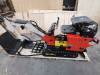
How Small Is “Smallest”?
If you're asking “what is the smallest tracked excavator,” you probably have a specific problem: a narrow gate, a tight backyard, or a job site that won't fit a standard machine. The answer depends on how you measure “small” – width, weight, or overall footprint.
In terms of width, the smallest tracked excavators are around 700mm (about 27.5 inches). Models like the Wacker Neuson 803 come in at exactly 700mm wide – narrow enough to fit through a standard interior doorway[reference:0][reference:1]. Some ultra-compact machines can retract their tracks down to 700mm for access, then expand to 900-1000mm for stability once they're inside[reference:2].
In terms of weight, the smallest class typically weighs between 600kg and 1000kg (0.6 to 1.0 tonnes)[reference:3]. The HT06 from Hightop is 600kg and 700mm wide – light enough to tow behind a standard pickup truck[reference:4]. At this weight, you're not moving boulders, but you're digging trenches, planting trees, and breaking concrete in spaces where a 2-ton machine can't go.
In terms of overall footprint, the smallest machines are about 1.9 meters long and 2.1 meters tall[reference:5]. They fit in a pickup bed, through a garden gate, and into basements. They're not built for production work – they're built for access.
What Can You Actually Do With One?
A 700mm-wide excavator isn't going to dig a foundation for a house. But it will do a lot of things that a larger machine can't:
- Indoor demolition: Roll it through a standard doorway, break up concrete floors, and haul out debris. The rubber tracks don't damage finished floors[reference:6].
- Greenhouse and nursery work: Work between rows without damaging soil structure or plant roots. Narrow tracks mean minimal soil compaction.
- Backyard landscaping: Dig trenches for irrigation, remove stumps, and grade soil in spaces that a full-size excavator can't access[reference:7].
- Urban construction: Work in alleys, courtyards, and tight residential lots where access is restricted[reference:8].
These machines are also easy to transport. At 600-1000kg, they can be towed behind a standard pickup on a small trailer. No special permits, no heavy-duty haulers.
What's the Trade-Off?
You trade size for power. A 700mm excavator has a digging depth of about 1.2-1.6 meters – enough for utility trenches and footings, but not for deep excavations[reference:9]. The bucket capacity is typically 0.02-0.03m³, so you're moving material in small loads. And the machine is stable, but you're not lifting heavy boulders or working on steep slopes.
If you need more reach or more power, you move up to a 1-ton or 1.5-ton machine – but you lose the ability to fit through a standard doorway. The choice is about your specific job site, not about which machine is "better."
Ready to tackle your next tight-space project? Explore the detailed specs, lift capacities, and attachments of our
Related News

.webp?x-oss-process=image/resize,w_100/quality,q_100)



.webp?x-oss-process=image/resize,w_100/quality,q_100)


.webp?x-oss-process=image/resize,w_100/quality,q_100)


Contact US
Product Information
Quantity
Unit
Piece
Support order samples, customization, wholesale direct, and complete payment. If the product you look for does not have corresponding customized content, pls fill out the form below to contact us, and we will reply ASAP.